


Most men layer for fall by adding volume: a thick hoodie under a puffy jacket, and suddenly they move like the kid from a nineties movie who cannot put his arms down. Good layering does the opposite. It adds warmth without adding bulk, so you stay comfortable through a temperature swing and still look sharp, not padded. The trick is thinner, better pieces that trap heat without stacking volume, and a tight palette that makes the layers read as one outfit. Here is how to do it.
The short answer. Layer thin to warm, not thick to bulky. Start with a substantial tee as the base, add a fine knit or overshirt as the middle, and finish with one structured top layer, and keep every piece slim enough to move under the next. Choose technical or fine-gauge fabrics that trap heat without volume over chunky knits and padded fleece. Keep the whole stack in one tight palette, navy, stone, olive, charcoal, so three layers read as a considered outfit instead of a pile. Make sure each layer works on its own, because you will shed them as the day warms. Skip the thick-under-thick combination that ruins your range of motion. Warm, streamlined, and tonal is the whole idea, and it means you can go from a cold morning to a warm afternoon without looking or feeling stuffed.
How do you layer for fall without looking bulky?
Use thin, warm pieces and a tight palette. Bulk comes from stacking thick items, so the fix is fewer, finer layers that each add warmth without volume: a substantial tee, a fine knit or overshirt, and one structured outer layer. Keeping them tonal makes the stack read as one outfit rather than three things at once. Each piece should also stand alone, since the point of layering is to add and remove as the temperature moves through the day.
The base and the middle
Start with a base that is more than a thin undershirt. A substantial Rhone Origin Tee ($54) holds its shape and works on its own once the afternoon warms. For the middle layer, reach for a fine knit or a light overshirt rather than a chunky sweater: a Surfside Tony Burnout Knit ($95) adds warmth with texture and no volume, and a Surfside Zhu Chambray Shirt ($125) works as a light overshirt that layers flat under a jacket.
The outer layer that does the work
Finish with one structured top layer, not a second bulky one. A TravisMathew Heater Pro 1/4 Zip ($119.95) blocks wind and traps heat without padding, and a Surfside Bobby 1/4 Zip ($125) layers cleanly over a knit while staying slim. Either one sits flat over the middle layer instead of ballooning it, which is the whole difference between warm and bulky. Pair the stack with a tailored Rhone Commuter Pro Five Pocket ($138) so the bottom half stays as clean as the top.
| Layer | Choose | Not |
|---|---|---|
| Base | Substantial tee | Thin cotton undershirt |
| Middle | Fine knit or overshirt | Chunky sweater |
| Outer | Slim quarter-zip or jacket | Padded fleece over a hoodie |
Palette and the details
The last trick is color. Keep every layer in a tight palette of navy, stone, olive, and charcoal, and the stack reads as one outfit instead of three separate things. Make sure each piece looks right on its own, because you will be peeling layers as the day warms. Ground it with a clean shoe and skip anything that adds visible bulk at the waist or shoulders. For occasion versions of fall dressing, see our men's fall weekend uniform and office clothes that aren't a suit. Shop the pieces in the Men's collection.
Frequently asked questions
How do you layer for fall without looking bulky?
Use thin, warm pieces instead of thick ones: a substantial tee, a fine knit or overshirt, and one structured outer layer, all slim enough to move under the next. Keep them tonal so the stack reads as one outfit.
What is the best middle layer for men in fall?
A fine knit or a light overshirt. Both add warmth and texture without the volume of a chunky sweater, and they layer flat under a jacket or quarter-zip.
How many layers should you wear in fall?
Usually three: a base, a middle, and an outer layer. The key is that each is thin enough to combine without bulk and good enough to wear on its own as you shed them.
What fabrics layer best without bulk?
Technical and fine-gauge fabrics that trap heat without volume. Avoid chunky knits and padded fleece stacked together, which is what creates bulk and kills your range of motion.
How do I make layers look intentional?
Keep everything in one tight palette of navy, stone, olive, or charcoal. Tonal layers read as a single considered outfit rather than a random pile of pieces.
Layer thin to warm, keep the palette tight, and fall stops being a choice between comfortable and sharp. Better pieces, fewer of them, worn together. (Out)do the ordinary, arms down.
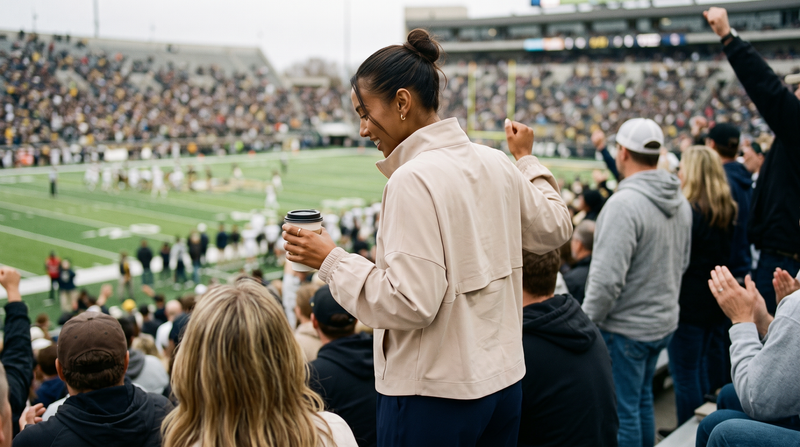
What to Wear to a Football Game: A Women's Guide
Cold metal bleachers, a long afternoon, and a temperature that drops at dusk. What to wear to a...
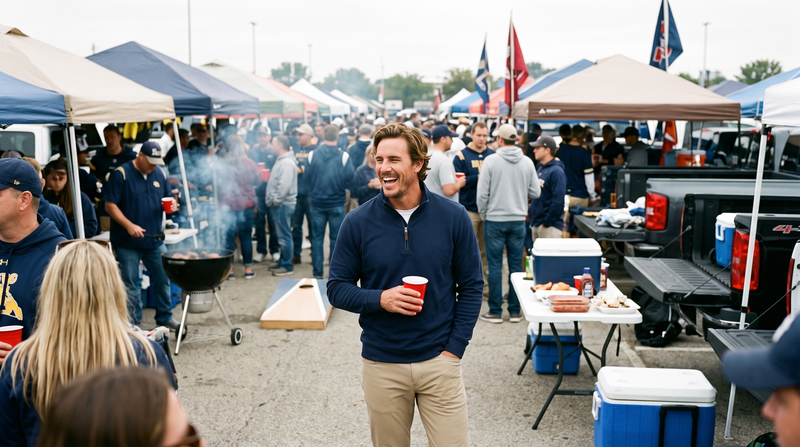
What to Wear to a Fall Tailgate: A Men's Guide
Cold lot at nine, warm stands by noon. A men's fall tailgate outfit built on layers you can...
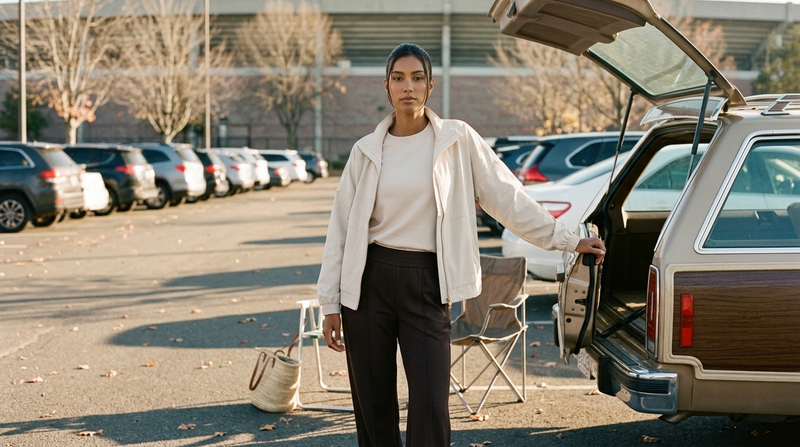
What to Wear to a Fall Tailgate
Forty-one degrees at nine in the morning, sixty-eight by kickoff. A three-layer tailgate outfit that handles both, with...