


The short answer: commuter pants earn the name when they combine four-way stretch and wrinkle resistance with the details of real trousers — a proper waistband, flat matte fabric, a clean taper, and belt loops. The tell that gives away gym pants in disguise is sheen and elastic ankles. The Rhone Commuter Pro Five Pocket is the reference point: technical to the touch, tailored to the eye.
The category promised pants you could bike, sit, sprint-for-the-train, and present in. Half of what's sold as commuter pants still photographs like joggers. Here's how to pick the ones that don't.
The five tells of a pant that passes
Matte fabric
Sheen is the number one giveaway. Good commuter fabric is dense and flat-faced — it reads as cotton twill or wool from a meter away and only reveals its stretch when you move.
A real waistband
Structured, with belt loops, even if there's hidden elastic doing quiet work at the sides. A drawstring visible above the belt line reclassifies the whole outfit.
Tailored hems
Straight or gently tapered, finished like trousers. Elastic cuffs belong on the trail, not in the meeting.
Trouser details
Five-pocket or clean slash pockets, hidden zip stash for a phone or card, seams that follow dress-pant lines rather than athletic paneling.
Recovery
The fabric must snap back. Bagged-out knees by 2 p.m. are how stretch pants lose the room.
Why the five-pocket is the smart default
The five-pocket silhouette — jeans architecture, technical fabric — is the most versatile answer in the category. It pairs with a tee on Friday and an oxford on Tuesday, and nobody can date the outfit or clock the fabric. The Commuter Pro Five Pocket nails the proportions: mid-rise, tapered but not skinny, in colors that read as menswear rather than gear.
Build the full commuter kit
The pant does the heavy lifting, but the system is what makes the bike-to-boardroom day seamless. Up top, the Commuter Shirt in slim fit brings the same trick — wrinkle-resistant, breathable, looks pressed at 6 p.m. In summer, the 9" Commuter Flyweight Short extends the logic to the hottest weeks. One fabric philosophy, head to toe.
How they should fit
Buy your trouser size, not your sweatpant size. You want a clean line through the thigh with enough room to pedal, a taper that ends just at the shoe, and no pooling at the ankle. If you're between sizes, size down — the stretch is there to be used.
FAQ
What are commuter pants?
Trousers cut from technical stretch fabric — wrinkle-resistant, quick-drying, often with hidden pockets — designed to handle a commute and still look like tailoring at the office.
Can you wear commuter pants to the office?
Yes — that's the point. Choose matte fabric, a tailored hem, and classic colors like navy, charcoal, or khaki, and they pass in all but the most formal settings.
Are commuter pants worth it?
If you wear them three days a week — which most owners do — the cost-per-wear beats both your chinos and your joggers.
The best technical clothing is the kind nobody can identify. Start with the pant, add the shirt, and let the fabric do its quiet work — the full lineup is in our Rhone collection.
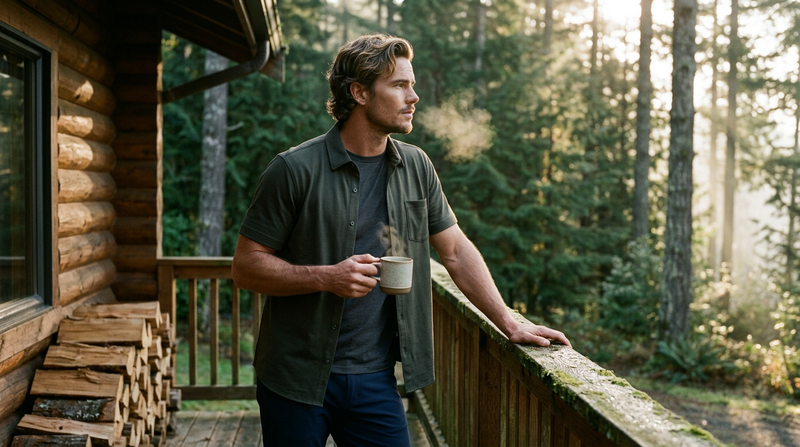
What to Wear to a Fall Cabin Weekend: A Men's Guide

What to Wear to an Outdoor Concert in the Fall
The temperature drops ten degrees between the opener and the encore. A three-layer formula for what to wear...

What to Wear to the Presidents Cup
Medinah, September 22–27. A six-inch bag limit, fifty-five degrees at the shuttle and seventy by the turn. Pockets...